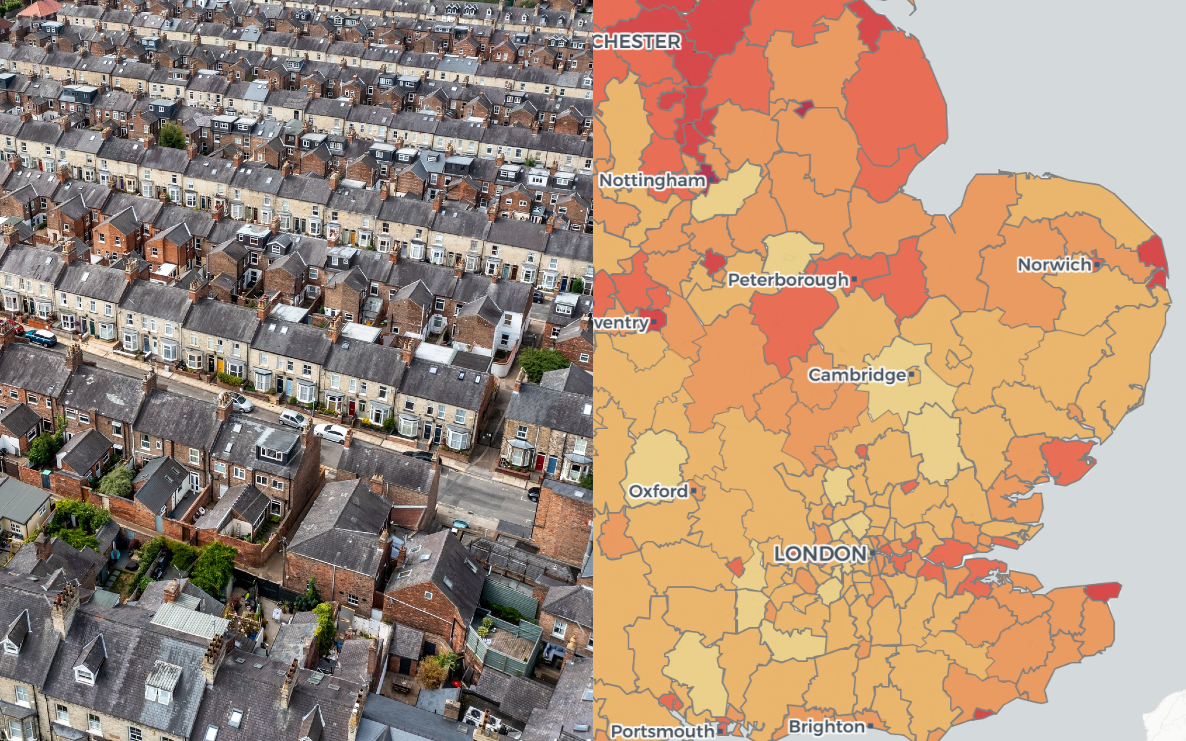
In February 2025, 57% of NHS patients were dissatisfied with the communication of NHS waiting times in the Mid and South Essex ICB, new data shows.
The statistics from the ONS’s Health Insight Survey, visualised today by Polimapper, show that in England there was a slight decrease in dissatisfaction from the month before and a significant one from the 1st wave of the current edition of the HIS.
Nonetheless, this comes as results from the British Attitude Survey reveal the lowest levels of NHS satisfaction recorded.
In February, an average of 12% of patients report their GP service changing for the worse within the last 12 months, whilst 10% report having a poor GP experience within the last 28 days. Conversely, 74% of users disclose having a positive experience in a GP practice.
Polimapper’s visualisation clearly displays cross country disparities in satisfaction with NHS services, particularly between areas in Cornwall and in Essex
In February, the highest satisfaction rates in GP experiences were seen in the NHS Herefordshire and Worcestershire Integrated Care Board, at 83.8%, followed by the NHS Cornwall and Isles of Scilly ICB, at 81.5%. Dissatisfaction was highest in Derby and Derbyshire (17.3%) and in Coventry and Warwickshire (17%).
Whilst Mid and South Essex ICB saw the highest dissatisfaction in the communication of NHS waiting times (57.3%), satisfaction was over 50% in the NHS Gloucestershire ICB.
About this map
The map below shows NHS satisfaction in February 2025, in England. The data refers to experiences with GP services and waiting times, and is categorised by satisfaction level and Integrated Care Board.
To view statistics in your area double click on the map or click here to launch the full page version!
Geodata context
This morning, the Nuffield Trust and the King’s Fund published their latest report on public satisfaction with the NHS and social care in 2024. From the figures, the research highlights the lowest level of satisfaction recorded since the survey began in 1983 and a steep decline of 39% from 2019.
The report saw only 21% of adults satisfied with NHS services, whilst 59% showed dissatisfaction. These rates can be directly linked to those from the Health Insight Survey.
Bea Taylor, author of the report and fellow at The Nuffield Trust: “Just five years after the British public were called on to “Protect the NHS” at the start of the pandemic, these findings reveal just how dismayed they are about the state of the NHS today. We found that every group in Britain is dissatisfied with access to vital services such as A&E and GP appointments.”
“The government says the NHS is broken, and the public agree. But support for the core principles of the NHS – free at the point of use, available to all and funded by taxation – endures despite the collapse in satisfaction. Harnessing this support and fixing the foundations of the NHS must be central to the government’s forthcoming reform programme.”
Dan Wellings, senior fellow at The King’s Fund: “The latest results lay bare the extent of the problems faced by the NHS and the size of the challenge for the government. While the results are sobering, they should not be surprising. For too many people the NHS has become difficult to access: how can you be satisfied with a service you can’t get into?”
“Voters are impatient for change, and Ministers will need to demonstrate rapid improvement, but that should not come at the cost of the bigger, whole-system reforms that are needed to create a truly sustainable health service. These results will form the baseline from which the new Labour government’s reform plans to ‘fix’ the NHS will be judged.”
Thea Stein and Sarah Woolnough, chief executives of Nuffield Trust and King’s Fund: “The government now finds itself walking a fine line between meeting public demands for rapid improvements on waiting times and avoiding the pitfall of throwing more money – of which there is virtually none – at a system in need of deeper reform.”
Saffron Cordery, interim chief executive of NHS providers: “NHS trust leaders are committed to delivering high quality care, tackling waiting lists and ensuring people get the care they need as quickly as possible across hospital, mental health, community and ambulance services. They are making progress, but they know they need to go further and faster to give patients the health services they want and deserve.”
“The 10-year health plan, with its focus on preventing ill-health and shifting care into the community, could be a game-changer for patients, and for the whole health and care system. We can’t afford to get it wrong.”